
ORION – Robotic Precision in the Treatment of Chronic Vessel Occlusions
Combining robotics, artificial intelligence, medical software and clinical expertise, ORION develops an integrated platform for image-supported magnetic navigation in Chronic Total Occlusions.
Start Date
February, 2026
Programme
Duration
36 months
Funding
€2,8 million
| What is ORION?
ORION (Occlusion Recanalization with Intelligent Optical Navigation) is a Dutch–German Interreg research project developing and evaluating an integrated preclinical platform for image-supported magnetic navigation in the treatment of Chronic Total Occlusions (CTOs).
By combining robotics, artificial intelligence, medical imaging and clinical expertise, the project aims to develop an innovative robotic system that supports safer and more precise vascular interventions. Over a period of three years, the consortium will advance the integrated system and prepare the evidence and documentation required for future regulatory development.
| What challenge does ORION address?
Chronic Total Occlusions (CTOs) are among the most challenging vascular diseases to treat. Current procedures often require physicians to manually guide rigid guidewires through heavily calcified vessels. These interventions are technically demanding, time-consuming and can be associated with complications such as vessel injuries or unsuccessful procedures.
ORION addresses these challenges by developing a new technological approach that combines robotic assistance, magnetic navigation and advanced image guidance.
| How does the ORION approach work?
ORION is developing a robotic system specifically designed for the treatment of Chronic Total Occlusions. The system combines:
- robotic assistance
- magnetic navigation
- artificial intelligence
- CT-based treatment planning
- real-time fusion of CT data with live fluoroscopy
Based on pre-acquired CT scans, an AI-supported three-dimensional treatment pathway is generated. During the intervention, this pathway is continuously combined with live X-ray imaging, enabling the magnetic navigation of a flexible microcatheter through the affected vessel.
| What does ORION aim to achieve?
According to preclinical data, the ORION approach has the potential to:
- significantly reduce the risk of vessel perforations
- shorten procedure times
- substantially reduce radiation exposure for patients and clinical staff
Beyond technological innovation, the project also aims to strengthen collaboration between research, healthcare and industry, support regional innovation and contribute to the development of future medical technologies.
| ORION Project Funding
The ORION project is being carried out as part of the Interreg VI Germany-Netherlands programme and is co-funded by the European Union, the Dutch Ministry of Economic Affairs (EZ), the MWIKE NRW and the province of Overijssel, with a total of 1.704.239,59 €.
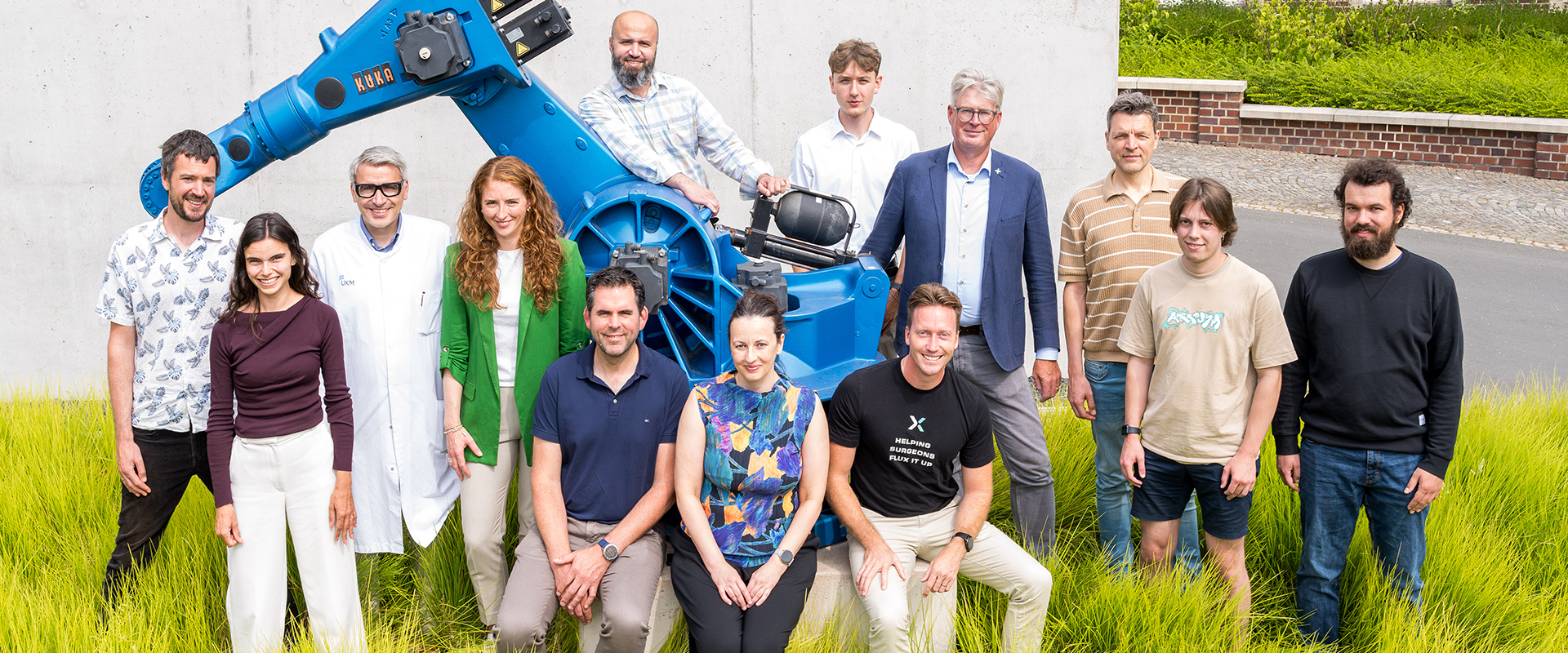
| Team members
| Project Partners

| Funding Co-Partners